Why Am I Tired All the Time? The 4 Types of Rest You Might Be Missing


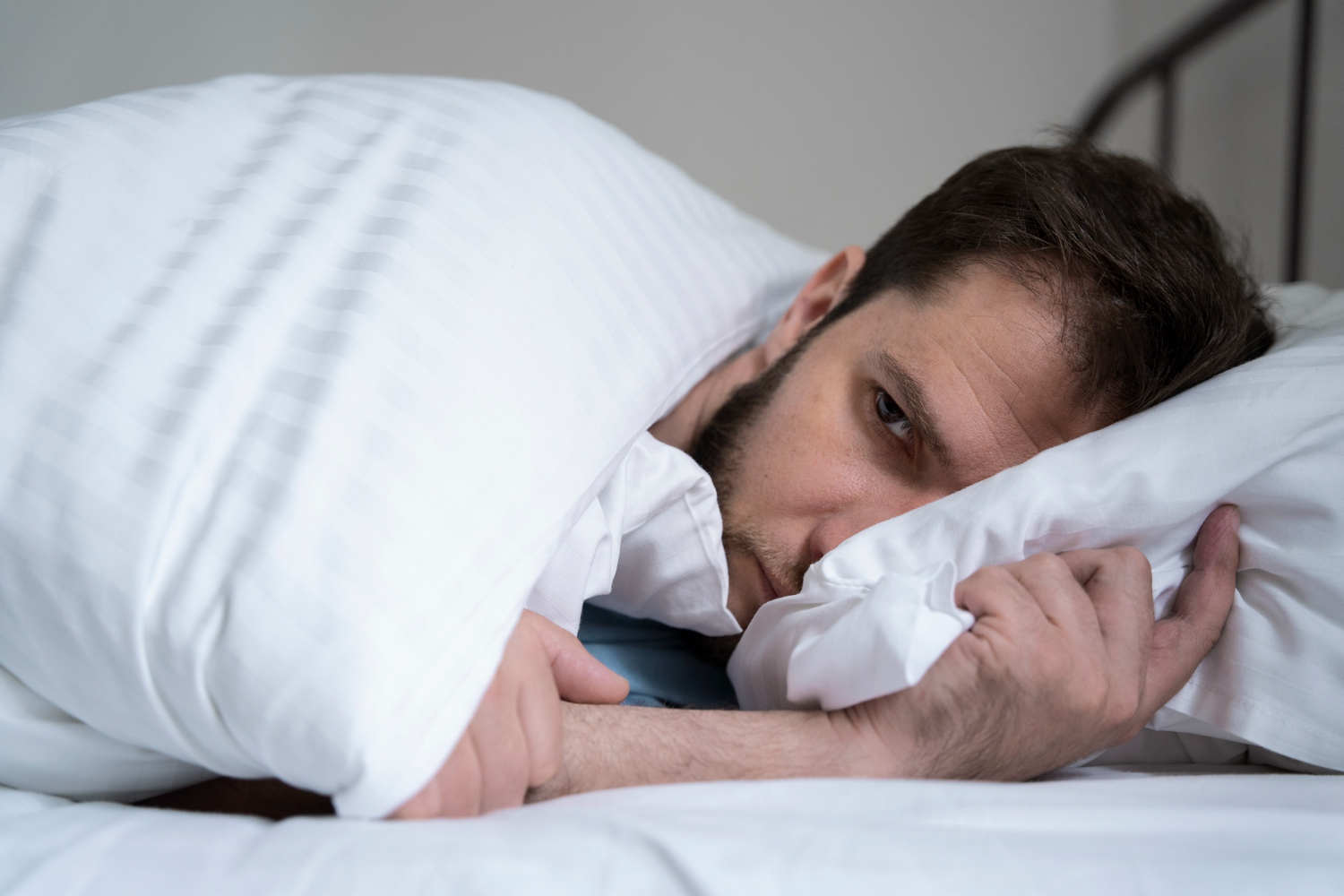
You slept eight hours and you are still exhausted. It is tempting to blame your schedule, your caffeine intake, or your phone. But not all tiredness comes from a lack of sleep. As a CBT provider working with clients, I have learned that fatigue has different causes, and each one calls for a different response. This article walks through four types of rest students often overlook, and how to tell which one your body is actually asking for.
Why Am I Tired All the Time? The 4 Types of Rest You Might Be Missing
If you are tired, going to lie down might not actually be the answer. I remember feeling confused because I could not rest my way out of exhaustion. The easy move when you feel drained is to nap, cancel your plans, and wait it out. The problem is that the type of fatigue you are feeling determines what will actually recharge you.
Think of it like a cough. One remedy works for a simple cough. If that cough is a symptom of something bigger, you need a different kind of treatment altogether. Tiredness works the same way. Depending on the reason behind it, what actually helps can look surprisingly different. Before you cancel your plans and crawl into bed, it is worth understanding what your body is actually asking for.
Why Am I So Tired Even When I Sleep Enough
Many individuals who feel exhausted have already ruled out the obvious explanation. They are getting close to seven to nine hours of sleep a night, yet the fatigue does not lift. Physician and researcher Dr. Saundra Dalton-Smith has written about this exact mismatch, arguing that sleep addresses only one kind of tiredness among several, and that a person can be well rested and still feel depleted (Harvard Health Publishing, 2026). Her original framework identifies seven distinct types of rest.
The four categories below are a simplified, clinic style adaptation of that idea, built around the fatigue that shows up most in student life. Physical, mental, creative, and social tiredness each have a different root cause, and each responds best to a different kind of recovery.
Physical Tiredness
Physical tiredness is the most familiar type, and it is usually tied to the basics of sleep. This includes getting under seven to nine hours a night, having sleep interrupted multiple times, or going to bed and waking up at inconsistent times from day to day. Canadian data suggests this pattern is common among students, with roughly one third of Canadians getting less than seven hours of sleep a night, and many reporting trouble falling or staying asleep (Campus Mental Health Works, n.d.).
For a student, this might look like pulling a late night to finish an assignment, then waking up early for a class the next morning, and repeating that pattern for days at a time. Over time, the debt adds up even if each individual night does not feel that bad.
The fix here is simple (notice I did not say easy). Prioritizing consistent sleep and wake times, protecting seven to nine hours where possible, and treating naps or quiet rest as a legitimate tool rather than a luxury can go a long way.
For ideas on how to regulate your nervous system, this article will get you started.
Mental Tiredness, the Kind That Sleep Does Not Fix
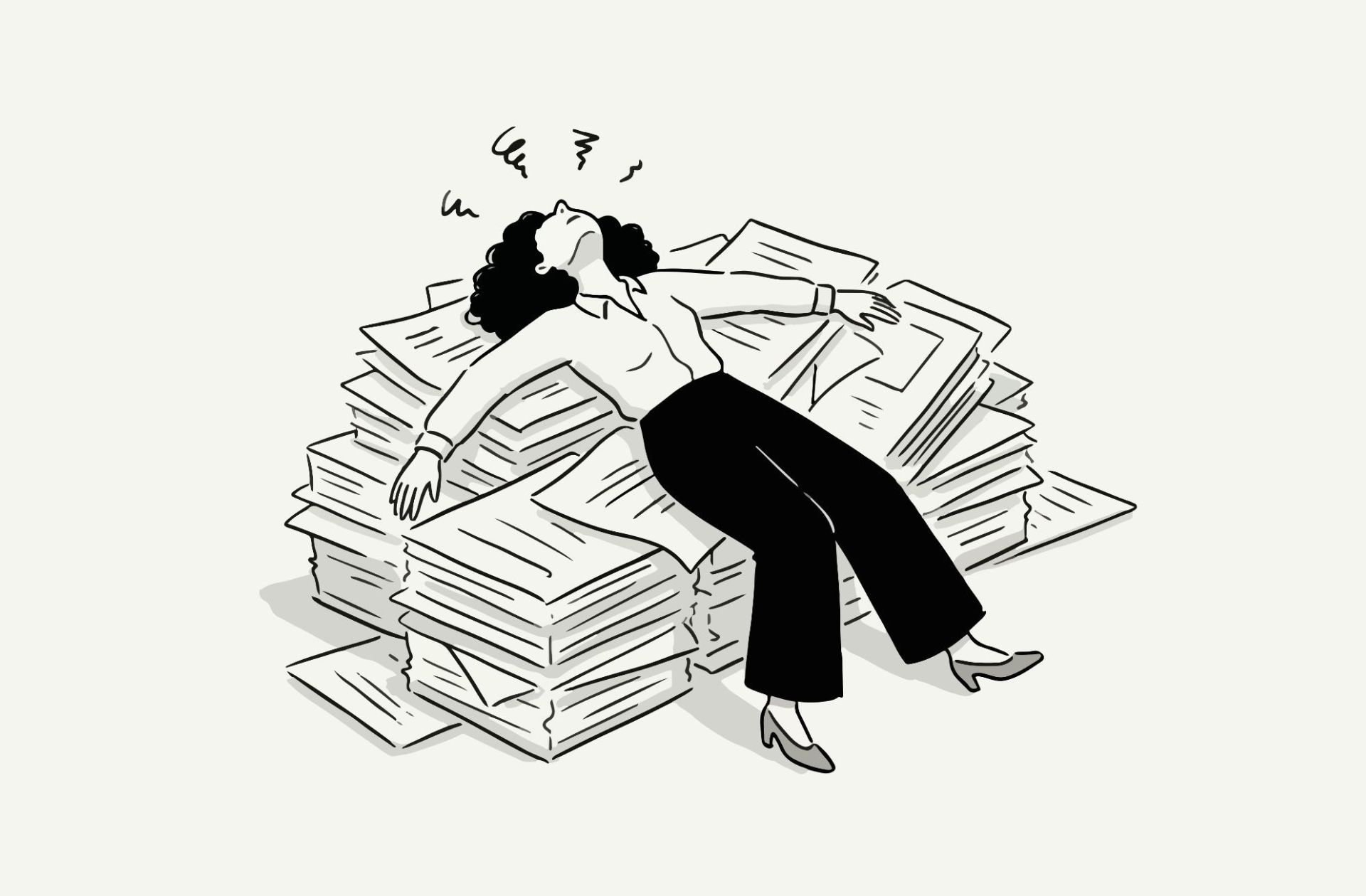
Mental tiredness comes from a different source. Decision making, planning, and prioritizing draw on the prefrontal cortex, the part of the brain responsible for executive function. Biologist Dr. Robert Sapolsky compares this region to a muscle, noting that it fatigues the more it is used throughout the day (Sapolsky, 2017). Research on decision fatigue supports this, showing that the capacity to regulate behavior and make sound choices is a limited resource that depletes with repeated use (Pignatiello et al., 2018).
For a student, this might look like a day packed with lectures, a group project meeting, and an assignment that required constant small choices about structure and wording. By evening, even simple decisions, like what to eat for dinner, can feel disproportionately hard.
Sleep alone will not undo this kind of tiredness. What helps is lowering cognitive load. A walk without your phone, light or familiar television instead of a new (attention demanding) show, or a few minutes of meditation can let your mind idle instead of being in problem-solving mode. It is also important to note that video games and other heavy decision making activities tend to keep the same system engaged rather than letting it rest.
Mental exhaustion needs a different approach. Click this link to read further about how to best support your mental tiredness.
Creative Tiredness, When You Have Not Made Anything
Creative tiredness looks different from the other two. It can show up even after a good night of sleep and a day that was not particularly stressful. For people who identify as creative, this fatigue often comes from going too long without an outlet for enthusiasm or self expression.
Research on intrinsic motivation offers a useful explanation. Activities that are novel, chosen freely, and driven by curiosity rather than obligation tend to energize rather than deplete, even when they take real mental effort (Di Domenico and Ryan, 2017). A demanding passion project can leave you feeling more alive, not less, because the demand is offset by choice and genuine interest.
For a student, this might look like restlessness or a vague sense of flatness on a weekend with no assignments due, paired with a pull toward photography, writing, or music that has nothing to do with coursework.
The solution here is counterintuitive. Instead of resting completely, spending an hour on a low stakes creative project, one with no deadline and no audience, can be the thing that actually restores energy.
Social Tiredness, and Why the Social Battery Idea Might Be Wrong
The idea of a social battery that drains with every interaction has become common shorthand for social fatigue. It suggests that socializing always costs energy and that isolation is always the cure. This idea deserves a closer look.
In a conversation on The Checkup with Doctor Mike, clinical psychologist Dr. Ali Mattu raised a similar question, asking how we know that socializing does not increase energy rather than drain it (Doctor Mike, 2026). Research supports part of this reframe. A study using Canadian data found that social connection was linked to greater happiness overall, and that people lower in extraversion benefited even more from strong social support and lower loneliness than those higher in extraversion (Card and Skakoon-Sparling, 2023). Socializing is not universally draining, and for some people, it is the very thing that recharges them.
For a busy adult, this might look like assuming that a week of nonstop house work means you need to cancel plans with friends this weekend, when in reality, obligation driven interaction and connection driven time with friends are not the same thing.
The more useful question is not whether to socialize, but who and how much. If you have been isolated all week, time with people who energize you can genuinely help. If you have been surrounded by people constantly, quiet time alone may be what your nervous system needs.
The Takeaway
In my work with clients navigating burnout, the biggest shift I try to encourage is not doing more rest, it is doing the right kind of rest. Sleep still matters and remains the foundation, but it is not a universal fix. The next time you feel drained, pause and ask what kind of tired you actually are, physical, mental, creative, or social, before automatically canceling your plans.
Sometimes the answer really is a nap. Other times, it is a walk, a low stakes creative project, or an evening with the right people. Learning to tell the difference is a skill that gets easier with practice. If exhaustion has been a constant, ongoing struggle rather than something that clears up with the right kind of rest, it may be worth talking to someone.
Not sure where to start, especially if you do not have a family doctor or psychiatrist? This article will guide you through the steps of how to start approaching your mental health care.
Disclaimer, this post is for education and self-awareness. It is not a diagnosis or replacement for therapy.
References
Campus Mental Health Works. (n.d.). The types of rest infosheet. Campus Mental Health. https://campusmentalhealth.ca/?p=24977
Card, K. G., & Skakoon-Sparling, S. (2023). Are social support, loneliness, and social connection differentially associated with happiness across levels of introversion-extraversion? Health Psychology Open, 10(1). https://pmc.ncbi.nlm.nih.gov/articles/PMC10328046
Di Domenico, S. I., & Ryan, R. M. (2017). The emerging neuroscience of intrinsic motivation, a new frontier in self-determination research. Frontiers in Human Neuroscience, 11. https://pmc.ncbi.nlm.nih.gov/articles/PMC5364176
Doctor Mike. (2026, June 3). A brutally honest conversation about Gen Z, Dr. Ali Mattu [Video]. YouTube.
Harvard Health Publishing. (2026). The 7 types of rest and why we need them all. Harvard Health. https://www.health.harvard.edu/mind-and-mood/the-7-types-of-rest-and-why-we-need-them-all
Pignatiello, G. A., Martin, R. J., & Hickman, R. L. (2018). Decision fatigue, a conceptual analysis. Journal of Health Psychology, 25(1), 123 to 135. https://pmc.ncbi.nlm.nih.gov/articles/PMC6119549
Sapolsky, R. M. (2017). Behave, the biology of humans at our best and worst. Penguin Press.