
Breathing Techniques to Calm the Nervous System: Therapist-Recommended Exercises for Anxiety and Stress
.png)
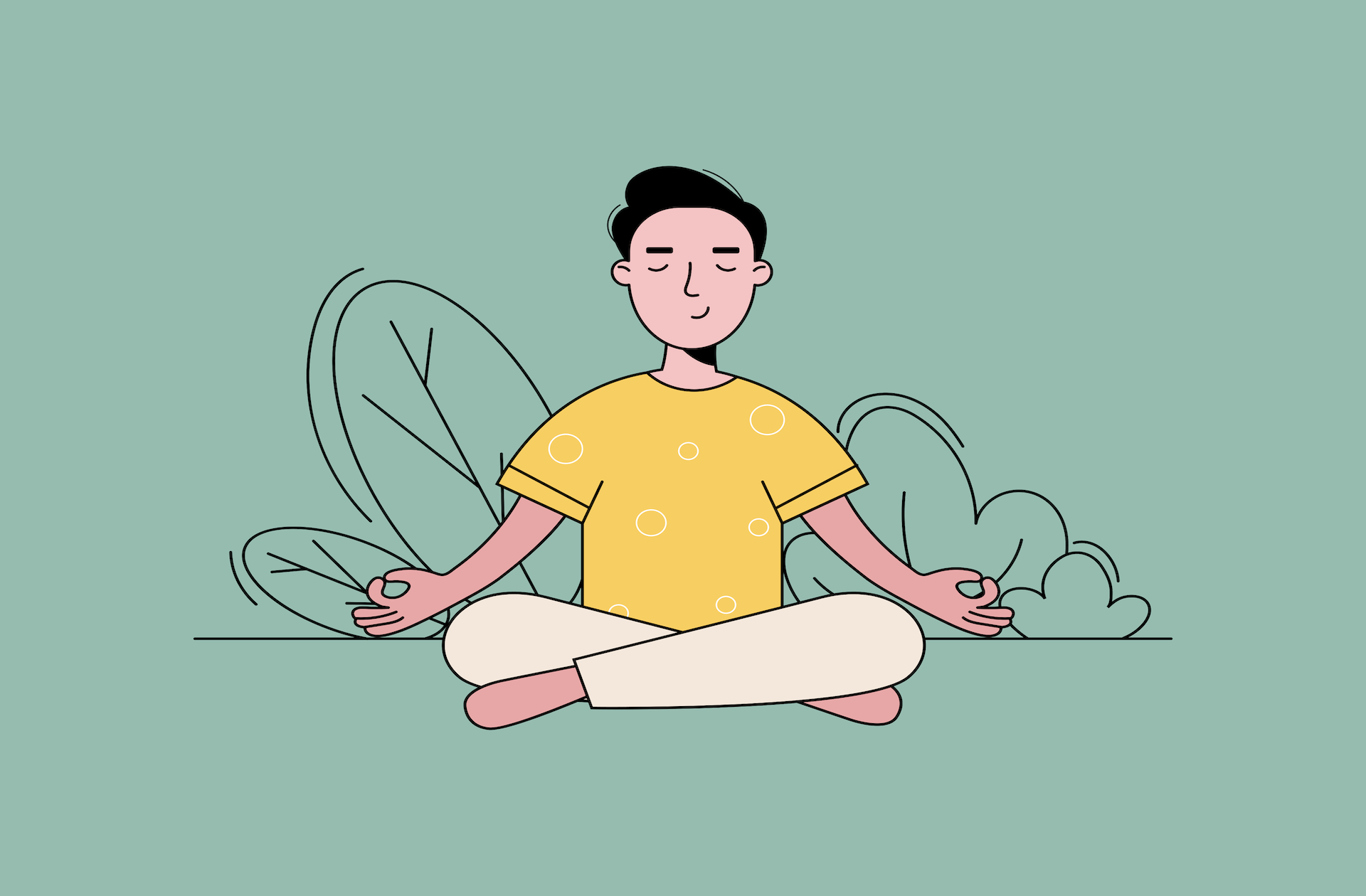
While anxiety is a natural motivator, when it becomes overwhelming, it triggers your sympathetic 'fight or flight' nervous system, leading to heightened stress. Fortunately, you have an immediate tool to take back control: your breath. This article outlines therapist-approved, evidence-based breathing techniques—such as Diaphragmatic, Paced, and Box Breathing—that work by stimulating your vagus nerve to activate your parasympathetic 'rest and recharge' system. By practicing these simple exercises, you can effectively manage stress, increase your emotional resilience, and train your body to respond calmly to life’s challenges.
Introduction
Anxiety is a natural emotion that everyone experiences, serving as a biological motivator; however, it becomes problematic when it manifests disproportionately to the situation at hand. For instance, while anxiety can drive you to meet a deadline, it is counterproductive when it keeps you awake with racing thoughts for a meeting that is weeks away. Anxiety and stress can make it harder to sleep, lead to substance use and lead to withdrawing from relationships (World Health Organization, 2025). Over the last several years, there is significant evidence pointing to the therapeutic benefits of breathing techniques (Bailey, 2024). In this article we will cover the following:
- How do breathing exercises work for anxiety?
- What are specific exercises you could use to calm anxiety?
- The importance of practice
How do Breathing Techniques Regulate the Nervous System?
In order to understand practical exercises of relaxation breathing, we need to talk about the biological mechanisms in your body. Specifically, we want to talk about your nervous system and its relationship to stress and anxiety.
For simplicity, there are two parts to your nervous system: the sympathetic and parasympathetic. The sympathetic system is designed for when danger is near and you need to act fast. The parasympathetic system is designed for you to rest and recharge. Depending on the brain’s perception of threat, it will switch operating between these two (Guy-Evans, 2025).
Imagine an automatic car switching between being in park versus being in drive. When we perceive danger (like a project due), our sympathetic nervous system activates. This results in our heart rate increasing, and our body increases its concentration of cortisol and adrenaline. The sympathetic system's logic is that if I am about to run away from a tiger (or that impending deadline), my brain, heart, and lungs are increasing the amount of oxygen that is being pumped to my organs.
How can we Activate our Parasympathetic Nervous System?
How can we turn on our parasympathetic nervous system instead? We can do this by decreasing the rate of our breathing (Bailey, 2024). We signal to our body that we are safe and that we can calm our body and minds.
We can use these techniques as an intervention in the moment as well as in advance. With repeated practice of these behaviours, distress tolerance can be increased (Carpenter et al., 2019). Distress tolerance is your ability to handle distress. The better your tolerance, the less likely you are to feel overwhelmed. This is also called emotional resilience. In other words, the stronger your tolerance, the harder it is to activate your fight or flight response accidentally.
Deep Breathing Exercises for Anxiety & Stress Relief
Diaphragmatic (Belly) Breathing
The first regulated breathing exercise that we recommend for anxiety relief is diaphragmatic breathing. Here is a step by step guide:
- Lie flat on your back with your knees bent. Feel free to use a pillow for comfort.
- Put one hand on your chest and one on your stomach.
- Breathe in slowly through your nose and expand your stomach.
- Breathe out and let your stomach fall back to its original position.
- Note, your chest should remain still the entire time.
Most of the time, people are not consciously aware of their breathing. This results in shallow breathing and chest expansion. Diaphragmatic breathing intentionally makes the individual take slower, deep breaths. It is recommended to practice this for 5 to 10 minutes a day, for best results.
The science- When we breathe into our stomach, we stimulate the Vagus nerve (Cleveland Clinic medical, 2022). This nerve plays a key role in activating your parasympathetic nervous system.
Paced Breathing
This is all about slowing your breath down to calm your nervous system.
- Get comfortable—sit or lie down, whatever feels easiest.
- Gently inhale through your nose for about 4 seconds.
- Then exhale slowly through your mouth for about 6 seconds.
- Keep that rhythm going—slow in, slower out.
- It may be helpful to imagine a wave coming in and out as you breathe.
The science: there is emerging evidence which reports that a slower exhalation than inhalation, can more quickly regulate your anxiety and stress (Bergland, 2024).
Box Breathing
- Inhale through your nose for 4 seconds.
- Hold your breath for 4 seconds.
- Exhale slowly through your mouth for 4 seconds.
- Hold again (with empty lungs) for 4 seconds.
- It can help to look actually trace a box like object with your eyes or finger while doing this
The Science: One of the challenges while practicing breathing techniques can be racing thoughts.This exercise gives you something specific to focus on.
Progressive Muscle Relaxation
Progressive muscle relaxation helps release physical tension you might not even realize you’re holding. Using deep breathing at the same time can optimize tension relief.
How to do it:
- Find a quiet spot where you can sit or lie down comfortably.
- Start with your feet. Gently tense the muscles (curl your toes, tighten your feet) for about 5 seconds while inhaling.
- Then fully release any tension in the muscles and exhale simultanoeusly.
- Move slowly up your body:
Calves
Thighs
Buttocks
Stomach
Hands and arms
Shoulders
Face - For each area: tense → hold → release.
The Science: anxiety and stress show up in the body. Research on the topic highlights the relationship between physical aches in the body and anxiety (Harvard Health Publishing, 2024).
Why Practice Matters
Breathing techniques are something that I regularly ask my clients to do. They are also something that I do daily for my own mental health and well-being. The most common pushback I hear about breathing exercises is, “I didn’t have a stressful week, so I did not do the breathing exercises.” I encourage my clients to move away from seeing these techniques as only treatments, but also as prevention. Research shows the more often you do it, the more benefits you can experience (Merschel, 2023). If you regularly do these practices, it can have the following effects: improved ability to navigate everyday stresses and improved rebound ability—it will allow you to more quickly bounce back after a stressful or anxious episode; additionally, when we practice techniques ahead of time, our ability to recall them in the moment will be easier.
In Cognitive Behavioural Therapy, we stress the importance of being emotionally regulated before one can think logically. Therefore, we can use breathing techniques to regulate physical and emotional symptoms first, thus enhancing our abilities to think rationally and deal with life’s challenges.
“Symptoms are not meant to be fixed, they are meant to be understood.” - Dr. Kent Comeau, Consulting Psychiatrist at Cognito.
The purpose of these techniques is not to eliminate anxiety altogether. It’s to more effectively communicate, when we are actually in danger. Anxiety is like a guard dog. It’s there to warn you of a perceived or real danger. Instead of getting rid of the dog, we can train it to effectively communicate when we are actually in danger. This allows us to recognize when a situation truly warrants our attention while helping us choose a measured, rational response.
Summary
Breathing techniques are the way you communicate to your body “I am safe. This is a false alarm, we can settle down.” You don’t need a fancy app, or an expensive retreat to Bora Bora to relax. You have the tools at your disposal right now. Ask yourself “what is the minimum amount of time that I can commit to practicing these exercises daily?” Even 5 minutes a day can be a great place to start.
For greater guidance with breathing techniques, we recommend seeking the support of a mental health practitioner who is familiar with these techniques.
Want to learn more evidence-based techniques for anxiety and stress? Book a call here Free Discovery Session, to speak with a team member regarding our services.
References
Bailey, K. (2024, April 1). The power of the breath. Yale School of Medicine. https://medicine.yale.edu/news-article/the-power-of-the-breath/
Bergland, C. (2024, May). Longer exhalations are an easy way to hack your vagus nerve. Psychology Today. https://www.psychologytoday.com/ca/blog/the-athletes-way/201905/longer-exhalations-are-an-easy-way-to-hack-your-vagus-nerve
Carpenter, J. K., Sanford, J., & Hofmann, S. G. (2019, May). The effect of a brief mindfulness training on distress tolerance and stress reactivity. Behavior therapy. https://pmc.ncbi.nlm.nih.gov/articles/PMC6494113/
Cleveland Clinic medical. (2022, January 11). Vagus nerve: What it is, function, Location & Conditions. Cleveland Clinic. https://my.clevelandclinic.org/health/body/22279-vagus-nerve
Guy-Evans, O. (2025, June 27). Sympathetic vs parasympathetic nervous system. Simply Psychology. https://www.simplypsychology.org/sympathetic-vs-parasympathetic-nervous-system.html
Harvard Health Publishing. (2024, July 29). Recognizing and easing the physical symptoms of anxiety. Harvard Health. https://www.health.harvard.edu/mind-and-mood/recognizing-and-easing-the-physical-symptoms-of-anxiety
Merschel, M. (2023, July). It’s not just inspiration – careful breathing can help your health. www.heart.org. https://www.heart.org/en/news/2023/07/07/its-not-just-inspiration-careful-breathing-can-help-your-health
U.S. National Library of Medicine. (n.d.). Checking your browser - recaptcha. National Center for Biotechnology Information. https://pubmed.ncbi.nlm.nih.gov/25156003/
World Health Organization. (2025). Anxiety disorders. https://www.who.int/news-room/fact-sheets/detail/anxiety-disorders



.png)


