Online Insomnia Treatment with CBT: Sleep Better and Regain Your Energy
.png)

CBT for insomnia helps you sleep better, manage stress, and regain energy.
Insomnia: What causes it, and what are the symptoms?
Sleep is fickle. According to research, approximately 20% percent of adult Canadians are plagued by some insomnia symptoms (Morin et al., 2024). And while most people’s sleep quality and quantity fluctuates often, 10% of the population are actually diagnosed with insomnia (Morin et al.). To do so, Doctors use the Diagnostic Statistical Manual 5th edition (APA, 2022) which outlines the criteria for insomnia disorder:
1. Complaint of dissatisfaction with sleep quantity or quality, associated with one (or more) of the following:
- Difficulty initiating sleep.
- Difficulty maintaining sleep (frequent awakenings or trouble returning to sleep).
- Early-morning awakening with inability to return to sleep.
2. The sleep disturbance causes clinically significant distress or impairment in social, occupational, educational, academic, behavioral, or other important areas of functioning.
3. The sleep difficulty occurs at least 3 nights per week.
4. The sleep difficulty is present for at least 3 months.
5. The sleep difficulty occurs despite adequate opportunity for sleep.
6. The insomnia is not better explained by and does not occur exclusively during the course of another sleep-wake disorder (e.g., narcolepsy, breathing-related sleep disorder, circadian rhythm sleep-wake disorder, parasomnia).
7. Insomnia is not attributable to the physiological effects of a substance (e.g., drug of abuse, a medication).
8. Coexisting mental disorders and medical conditions do not adequately explain the predominant complaint of insomnia.
As anyone who has been diagnosed with insomnia will tell you, the impacts go far beyond feeling a little extra sleepy in the morning. Research shows that in fact, insomnia can substantially lower one’s quality of life and increase the risk of anxiety and depression (Lin et al., 2025). Many clients coming to Cognito Health for online insomnia treatment report these types of struggles and we see how deep the impacts run through every aspect of their lives. However, research has also provided us with information on the causes of insomnia, therefore giving us direction for treatment. Lin et al., (2025) summarize the following causes:
1. Chronic stress that keeps the body in fight or flight mode.
2. Poor sleep habits and hygiene.
3. Unhelpful thinking patterns that cause excessive worry and fixation, thus making sleep even harder to achieve.
With this knowledge, treatment falls into two main categories: pharmacotherapy and Cognitive Behavioral Therapy for insomnia, the latter typically being the first line of treatment (Morin et al., 2024).
How Online CBT for Insomnia Can Help?
CBT for insomnia, or CBT-i, is becoming more accessible with the rise of virtual therapy. CBT-i is an effective, evidence based treatment that uses “cognitive restructuring and behavioral interventions to improve sleep efficiency and quality” (Lin et al., 2025). Online insomnia treatment that includes CBT is a flexible and accessible option for those who need support to address the internal and external factors at play, amidst their busy lives.
Through virtual therapy for insomnia, you can learn to develop and optimize your sleep routines and habits while catching and challenging unhelpful thought spirals that lead to the seemingly hopeless effort to fall asleep. As well, CBT-i teaches behavioural techniques that help you control what you can and monitor what you can’t, giving you more power over your sleep patterns.
Key Components of CBT for Insomnia
There are several key components of CBT-i that build upon each other to target the various aspects of insomnia. First is education around sleep and sleep hygiene which includes creating a conducive sleep environment, developing healthy sleep habits and routines, and avoiding practices that could interfere with sleep. Next is learning relaxation techniques, like deep breathing or muscle relaxation, to calm your body before bed. Then comes stimulus control, which focuses on reducing the amount of time we spend awake in bed, to help preserve the connection between our beds and sleepiness. After that, we work to address any unhelpful, automatic thoughts about sleep that might actually be making it harder for us to fall asleep. And finally, the tool of sleep restriction is applied to reset our sleep patterns and balance our circadian rhythms.
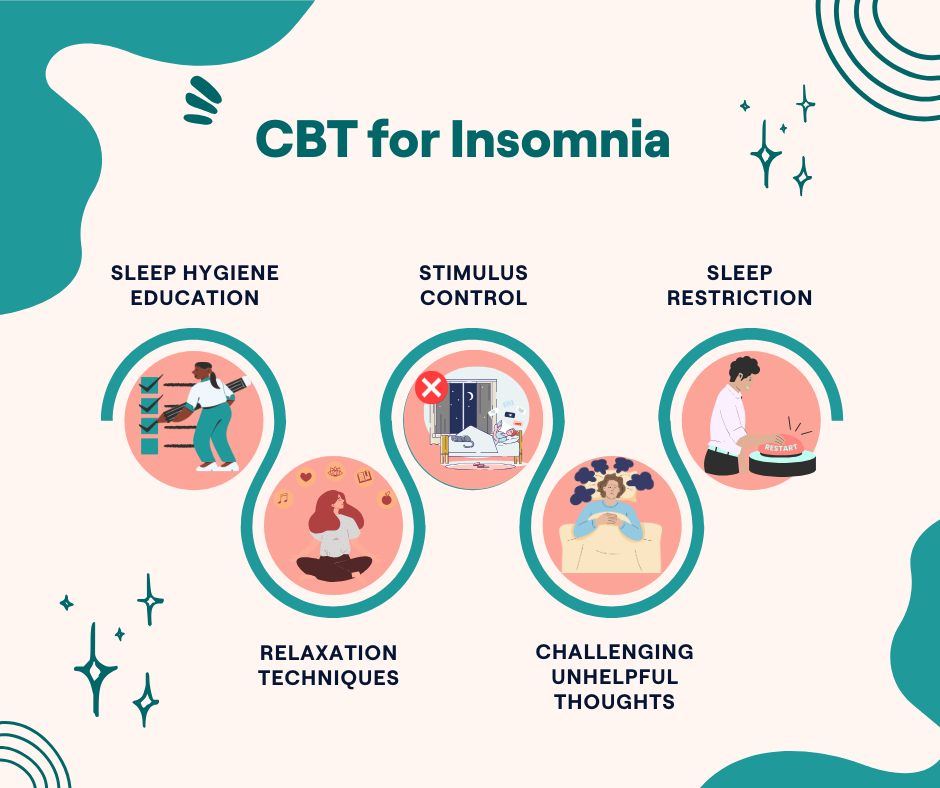
CBT for Insomnia has proven to help people form better sleep habits and routines, improve sleep quality and reduce symptom severity, increase ability to fall asleep and stay asleep and the benefits last overtime when techniques are practiced regularly (Lin et al., 2025).
Client Voices - Here is what one patient shared after completing a Cognito CBT for Insomnia Group Therapy Program:
“In attaining the techniques learned throughout the course has made a huge difference, my sleep ratio went from 60% to 83% consistency.” - Carlos, male, age 54
Cognito Health’s Virtual Insomnia Treatment
Cognito offers a comprehensive treatment option through integrated care from Nurse Practitioners, CBT Care Providers, and psychiatrists. Our team offers support to people struggling with insomnia symptoms through bi-monthly, 1:1 CBT sessions, psychiatrist-led insomnia CBT group therapy, and professional diagnoses and medication support.
When coming to Cognito Health for online insomnia support, you’ll go through an initial assessment from a medical provider to ensure we have the full picture of your mental health. After that, we support you with a personalized treatment plan, based on what you feel is most important to address, supported by our clinical knowledge of effective treatment approaches. We understand that people’s experience with insomnia symptoms can look different, so we work diligently to ensure we are meeting you where you’re at and to incorporate techniques that fit your lifestyle.
The Bottom Line
Insomnia is a common, and many times debilitating condition. However, it is treatable. A rich evidence base supports the successful use of Cognitive Behavioral Therapy for insomnia treatment and the virtual clinic approach offers the accessibility of the modern world we live in.
If you are suffering from sleepless nights, unhelpful thought spirals or habits that lead to prolonged poor sleep quality, we are here to support you. You can learn CBT-i strategies to reduce your symptoms and explore medication options if interested, all while being supported by a real person on the other side of the screen.
Not sure if CBT is for you? Or if you’re experiencing insomnia or something else? Try out our quick self-assessments that screens for insomnia, anxiety, depression and ADHD to uncover what type of support might best suit your needs. We are here for you.
References:
American Psychiatric Association. (2022). Diagnostic and statistical manual of mental disorders (5th ed.).
Lin, C., Cheng, C., Xia, Y., Wang, R., Zhang, L., Han, L., ... & Peng, Y. (2025). Internet-delivered Cognitive Behavioral Therapy for Insomnia: The Future of Insomnia Treatment with Large Language Models. Sleep Medicine: X, 100157.
Morin, C. M., Vézina-Im, L. A., Chen, S. J., Ivers, H., Carney, C. E., Chaput, J. P., ... & Canadian Sleep Research Consortium. (2024). Prevalence of insomnia and use of sleep aids among adults in Canada. Sleep Medicine, 124, 338-345.