Why Am I Always Mentally Exhausted? What Your Brain and Body Are Telling You
.png)
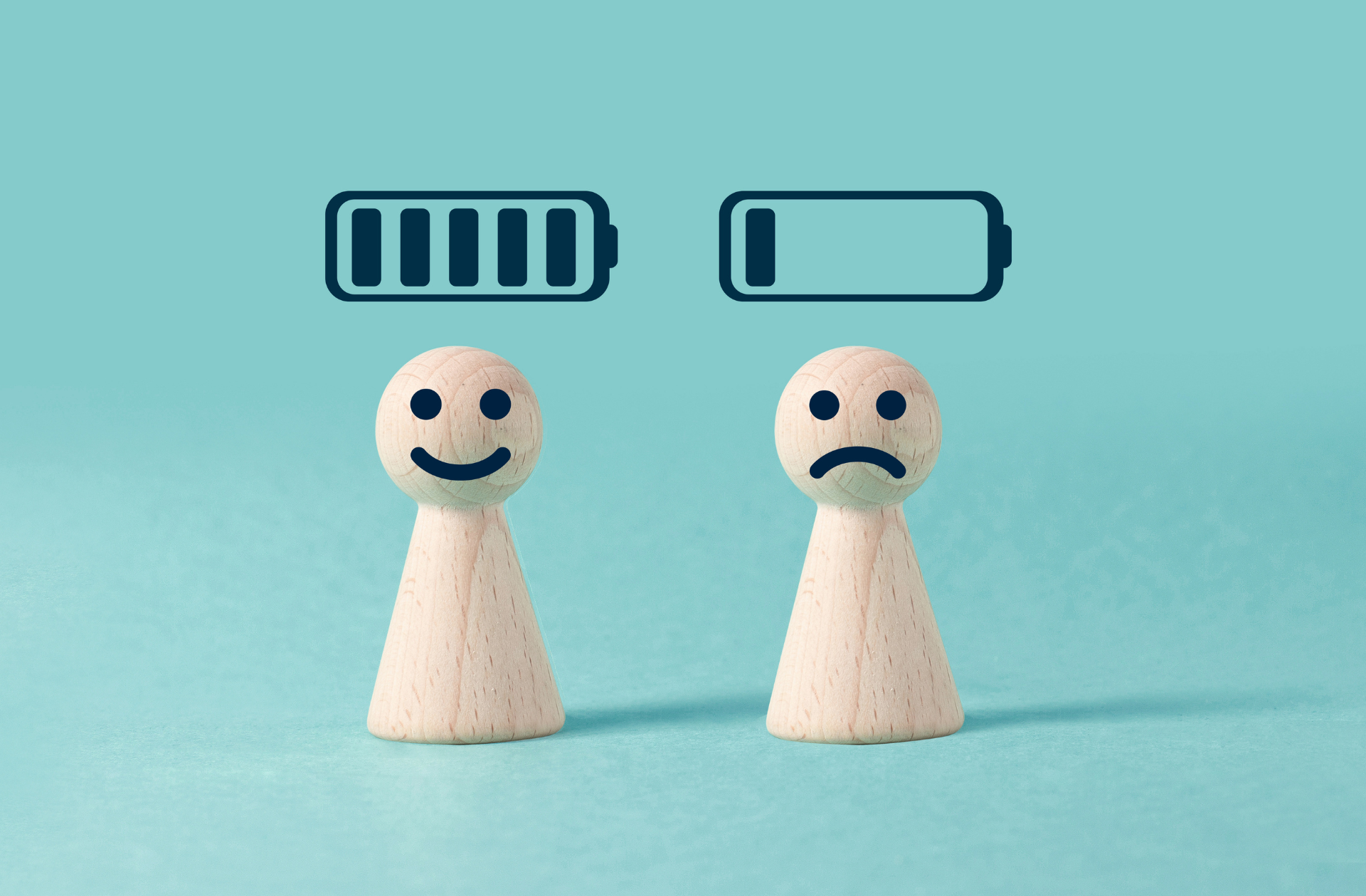
You make lunches in the morning. You show up to meetings. You answer the emails. You get the kids to practice, help with homework, and somewhere in between, you try to be present for your partner. By the time the house is quiet, you have nothing left. Not tired in the way that sleep fixes. Something deeper. A kind of depletion that follows you into the next day, and the one after that.
If you have ever asked yourself, “why am I always mentally exhausted,” the answer is probably not what you think. It is not about working harder, or needing a vacation, or finding better time management tips. It is about what your brain has been quietly doing in the background, and what it costs.
What Mental Exhaustion Actually Looks Like
Most people who are mentally exhausted all the time do not describe it as a mental health concern at first. They say things like: "I feel drained." "I am running on empty." "I feel slower than I used to." "I know I need to be there for my family, but I just cannot get there."
In a clinical setting, what is often striking is not just what people say, but how they look when they say it. There is a particular kind of wired tiredness that shows up in the eyes. Wide, alert, slightly glazed. The sympathetic nervous system is activated simply from describing the week. The voice goes flat. The affect drops. These are not signs of laziness or weakness. They are signs of a nervous system that has been running at full capacity for far too long, with nowhere near enough recovery.
The image that comes to mind is someone treading water. Head just above the surface, arms and legs working constantly just to stay there. A life jacket gets thrown their way, and they cannot grab it, not because they do not want help, but because every ounce of effort is already being used just to stay afloat.
Why Your Brain Is So Exhausted
The brain is metabolically expensive, meaning it acts like a high-energy engine that constantly requires a significant amount of fuel to function. Although it accounts for only about two percent of body weight, it consumes roughly twenty percent of the body’s total oxygen supply (Raichle & Gusnard, 2002). When it is under sustained pressure, that cost goes up significantly.
Here is what is happening beneath the surface. When the brain detects a threat, whether that is a tiger in the wild or an upcoming mortgage payment, it activates the HPA axis, which stands for the hypothalamic-pituitary-adrenal system. This triggers a release of cortisol and other stress hormones, signaling to the entire body that it needs to mobilize. Heart rate increases. Focus narrows. Resources get redirected toward dealing with the perceived danger (McEwen, 2017).
This system is designed for short bursts. A real threat, a real response, and then recovery. The problem for busy working adults is that the threats never stop. The danger is not a predator. It is the mortgage, the promotion, the dinner that needs to be made, the child who needs help with homework, and the partner who deserves more than the leftover version of you. The sympathetic nervous system stays switched on. Cortisol keeps circulating. The parasympathetic nervous system, the one responsible for rest and recovery, barely gets a turn.
It is not that these people are going from zero to one hundred and back to zero. They are going from thirty to one hundred, and never finding zero. That is why they are mentally and emotionally drained. There is no off switch.
See our article on breathing techniques to activate the parasympathetic nervous system.
The Psychology Underneath the Exhaustion
Neuroscience explains the mechanism, psychology explains why it keeps going.
Many people who experience chronic mental exhaustion are operating from a deeply held belief that their value is tied to their productivity and reliability. Being a good parent means always having energy for the kids. Being a good partner means showing up fully. Being a good employee means never dropping the ball. These are not unreasonable values. The problem is the rule that gets built around them: I must always be available, always have the answer, always have something left to give.
This leads to what might be called a self-fulfilling prophecy. In trying to be everything to everyone, a person gradually depletes their capacity, meaning their emotional and cognitive reserves. With less capacity, their relationships suffer. Their work output drops. They become less present, not more. The very thing they were working so hard to prevent ends up happening anyway, not because they did not care enough, but because the strategy was never sustainable to begin with.
The exhaustion is not a sign of insufficient effort. It is a sign of the wrong strategy.
What People Try First, and Why It Does Not Work
There is a pattern worth naming, and it is called the paradox of more. When someone is burnt out and cognitively depleted, the instinct is often to add something. Sign up for the gym. Download a wellness app. Book a yoga class. Buy a productivity planner.
The intention is good. The logic is understandable. The outcome is usually the opposite of what was hoped for. Now there is one more thing on the list that is not getting done. One more area generating shame. The question shifts from “is this the right strategy” to “why can I not even help myself.”
Getting better when you are mentally exhausted all the time does not mean doing more. It means being very intentional about what you do, and honest about how much capacity you actually have to work with right now.
See our article on executive dysfunction, shutdown, and what helps.
What Actually Helps When Your Mental Stamina Is Low
The first and most meaningful shift is not a technique. It is awareness.
Think of it this way. Imagine two researchers conducting an experiment. One has a great day and attributes it to wearing the colour yellow. The other asks, how do we know that was not a coincidence? How do we know there are not other variables at play? Most people experiencing chronic exhaustion have identified one variable: effort. They believe the solution is to try harder. What is worth introducing is a second variable, strategy. The question is not how much effort you are putting in. It is whether the approach itself is working.
From there, a few evidence-based directions worth knowing about:
- Acknowledge what is actually happening. Awareness is the opposite of ignorance, and it is where change begins. You cannot address something you have not named. Recognizing that you are operating at low capacity is not defeat. It is information.
- Reduce before you add. Rather than introducing new commitments, look at what can be temporarily reduced, delegated, or released. Recovery requires space, and space requires subtraction, not addition.
- Protect even small windows of parasympathetic recovery. Short periods of genuine rest, not scrolling, not planning, but actual downtime, allow the nervous system to begin recovering. Even ten to fifteen minutes of deliberate rest can interrupt the cortisol cycle (McEwen, 2017).
- Consider professional support. Cognitive Behavioural Therapy has strong evidence for addressing the thought patterns, core beliefs, and behavioral cycles that sustain emotional exhaustion (Hofmann et al., 2012). A therapist can help you identify what is driving the cycle and build a sustainable path forward, at a pace that accounts for your actual capacity right now.
Learn more about how CBT works at our clinic.
You Are Not Failing. You Are Running the Wrong Race.
Mental and emotional exhaustion in busy working adults is not a character flaw. It is the predictable outcome of a nervous system that has been asked to sustain high output with minimal recovery, driven by values and beliefs that were never designed to be lived at this pace.
The people who feel this way are often the most dedicated, most caring, most conscientious people in every room they walk into. The problem is not their commitment. It is that somewhere along the way, sacrificing their own wellbeing started to feel like proof of that commitment.
It does not have to stay that way. Recognizing what is happening is the first step. Getting support is the next one.
If mental and emotional exhaustion is affecting your work, relationships, or sense of self, our team offers CBT and mental health support in British Columbia and Ontario, including for adults without a family doctor or psychiatrist → Book a free consultation.
Disclaimer: This post is for education and self-awareness. It is not a diagnosis or replacement for therapy.
References
Hofmann, S. G., Asnaani, A., Vonk, I. J. J., Sawyer, A. T., & Fang, A. (2012). The efficacy of cognitive behavioral therapy: A review of meta-analyses. Cognitive Therapy and Research, 36(5), 427–440. https://pmc.ncbi.nlm.nih.gov/articles/PMC3584580/
McEwen, B. S. (2017). Neurobiological and systemic effects of chronic stress. Chronic Stress, 1, 1–11. https://doi.org/10.1177/2470547017692328
Raichle, M. E., & Gusnard, D. A. (2002). Appraising the brain’s energy budget. Proceedings of the National Academy of Sciences, 99(16), 10237–10239. https://doi.org/10.1073/pnas.172399499