Why Traditional Goal Setting Fails with ADHD—and What Actually Works
.png)

Setting goals with ADHD can be tough. Here are some compassionate, ADHD-friendly strategies for follow-through, without the perfectionism.
If you live with ADHD, you probably know the frustration of big plans that never seem to stick. You might start with excitement, but as soon as the steps feel too big, motivation vanishes. Or you may set goals that sound good in the moment but feel impossible once real life kicks in. Then comes the guilt spiral: “Why can’t I just follow through like everyone else?”
The truth is, goal setting taps directly into executive functions, the brain skills involved in planning, prioritizing, and self-regulation. These are the very areas ADHD tends to impact (Barkley, 2023). That means traditional goal-setting advice like “just be more disciplined” or “try harder” is often unhelpful and ineffective.
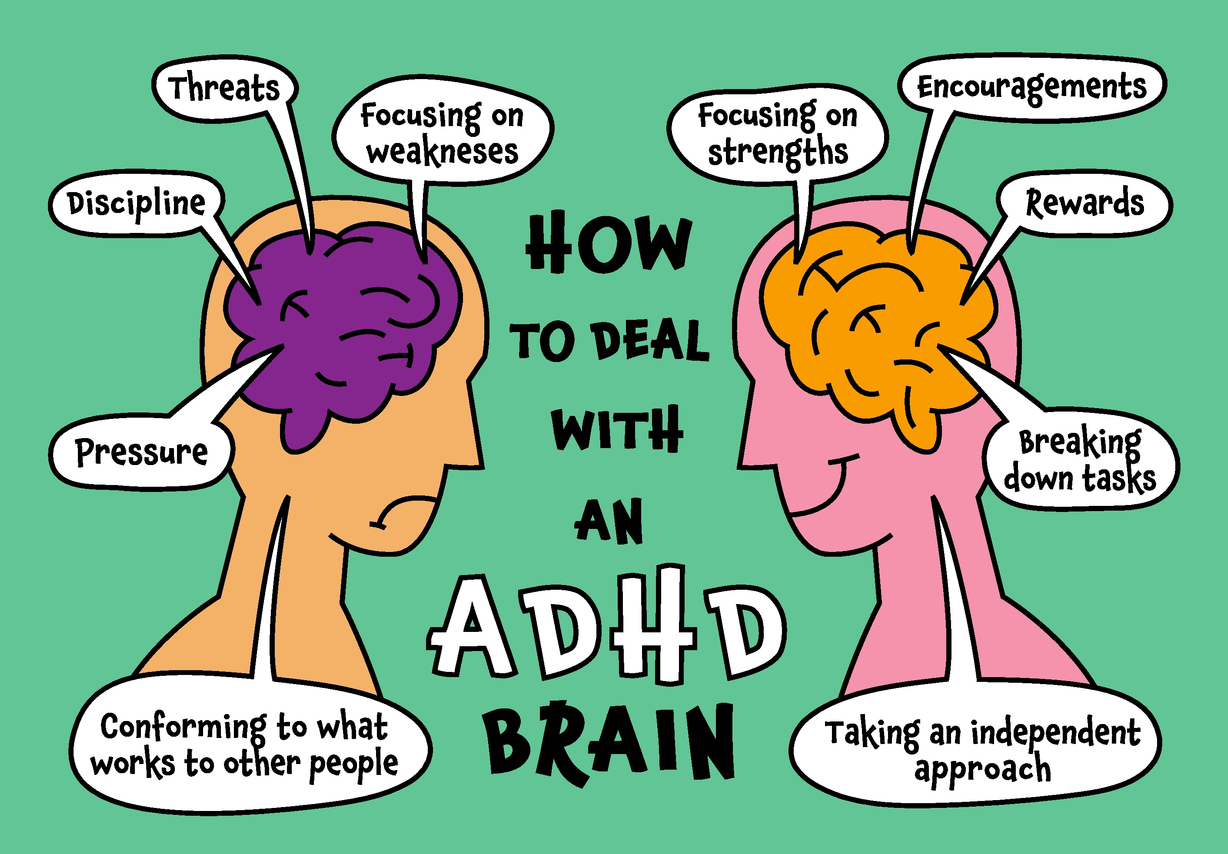
The good news is there are ADHD-friendly ways to set goals that actually work. They focus less on willpower and more on external support, small steps, and self-compassion. With the right approach, goals can shift from overwhelming to achievable, helping you build confidence and momentum.
ADHD-Friendly Ways to Set Goals
Here are a few evidence-based strategies that make goal setting more supportive for ADHD brains:
- Shrink the target. Instead of “organize my whole house,” start with “clear off the desk” or “sort one drawer.” Breaking down big goals makes them less intimidating and more doable (Rad et al., 2025).
- Use external cues. Don’t keep goals in your head. Write them down, set reminders, or put visual cues in your environment. ADHD brains benefit from structure outside of memory (Barkley, 2023).
- Anchor goals to values. Research shows motivation improves when goals connect to personal meaning, not just external pressure. Ask yourself, “Why does this matter to me right now?”
- Celebrate progress, not perfection. Each step forward counts. Self-compassion is linked to lower stress and better follow-through (Nazari et al., 2025).
These strategies shift the focus from doing it all to building momentum one step at a time.
Progress over perfection
One of the hardest parts of ADHD is the all-or-nothing mindset. An example might be, If the whole plan can’t get done, it feels like failure. But real progress comes from chipping away at goals in small, repeatable steps.
Think of your goals less like a sprint and more like a staircase: every step gets you further, even if it feels slow. When setbacks happen (and they will), self-compassion keeps you moving. Progress, not perfection, is the real marker of success.
Team Voices: Here is what one of our team members at Cognito has to say:
“ When I am feeling stuck with a goal, I start by saying something compassionate to myself. I validate that I’m struggling right now, but I can get it done. Next I grab a pen and paper, break down my task, and celebrate each step as I go” - Sarah Wiebe CBT Provider
Everyone Needs a Little Help Sometimes
If setting and following through on goals has been a source of frustration, you’re not alone. ADHD makes goal setting uniquely challenging, but there are ways forward that don’t rely on shame or endless willpower. At Cognito, we help people with ADHD use evidence-based CBT tools to build structure, reduce overwhelm, and keep moving toward what matters most.
Disclaimer: This post is for education and self-awareness. It is not a diagnosis or replacement for therapy.
References:
Barkley, R. A. (2023). ADHD: What everyone needs to know. Oxford University Press.
Nazari, A. M., Borhani, F., Abbaszadeh, A., & Kangarbani, M. A. K. (2025). Self-compassion, academic stress, and academic self-efficacy among undergraduate nursing students. BMC Medical Education, 25, 506.
Rad, H. F., Bordbar, S., Bahmaei, J., & Vejdani, M. (2025). Predicting academic procrastination of students based on academic self-efficacy and emotional regulation difficulties. Scientific Reports, 15, 3003.
.png)