CBT vs. DBT for Anxiety Treatment: Key Differences, Techniques & Which Therapy Fits Your Symptoms


Choosing between CBT and DBT can be confusing when seeking anxiety treatment. Discover the key differences in techniques and learn which therapy aligns best with your specific symptoms and needs.
For adults navigating evidence-based anxiety treatment, understanding the difference between CBT and DBT is a critical first step. While many people find themselves researching CBT therapy vs DBT, or even comparing broader modalities like DBT vs CBT vs ACT, this clinical guide focuses strictly on Cognitive Behavioural Therapy (CBT) and Dialectical Behaviour Therapy (DBT). By examining how these two approaches handle chronic worry, panic, and overlapping conditions like adult ADHD, you can determine which cognitive treatment best fits your specific symptoms.
Direct Answer Summary: CBT vs. DBT for Anxiety
In Canadian clinical practice guidelines (CANMAT), Cognitive Behavioural Therapy (CBT) is the first-line psychotherapy for anxiety disorders because it directly targets the cognitive distortions and avoidance behaviours that keep chronic worry and panic alive. Dialectical Behaviour Therapy (DBT) complements CBT by teaching bottom-up distress tolerance and emotion regulation skills for moments when emotional arousal spikes so high that logical thought-challenging feels out of reach.
According to the Canadian Clinical Practice Guidelines for the Management of Anxiety, Posttraumatic Stress and Obsessive-Compulsive Disorders (Katzman et al., CANMAT/BMC Psychiatry) and the Centre for Addiction and Mental Health (CAMH), CBT holds the strongest empirical evidence base for treating Generalized Anxiety Disorder (GAD), Social Anxiety Disorder (SAD), Panic Disorder, and specific phobias.
Developed by Aaron Beck in the 1960s, CBT is a structured, change-oriented modality. It operates on the premise that distorted thoughts and maladaptive avoidance behaviours maintain anxiety. Conversely, Marsha Linehan developed Dialectical Behaviour Therapy (DBT) in the late 1980s as an adaptation of CBT. DBT balances change strategies with radical acceptance, known as "dialectics."
Patients can benefit from CBT when their anxiety is driven by chronic worry loops, "what-if" catastrophizing, or behavioural avoidance. DBT is the better choice when anxiety manifests as rapid, high-intensity emotional escalation, acute panic crises, or severe transdiagnostic emotion dysregulation. As noted in a 2025 clinical review in Psychiatric Annals (Moskow, 2025), these two therapies do not compete. Clinicians frequently integrate DBT distress tolerance tools to help anxious patients regulate their nervous systems enough to engage in CBT cognitive restructuring.
Core Mechanism Comparison Table
To understand the difference between CBT and DBT, it helps to look at their foundational mechanics. The following table outlines how CBT vs dbt operate in clinical practice.
How CBT Treats Anxiety (Cognitive Restructuring and Exposure)
CBT conceptualizes pathological anxiety as a self-reinforcing cycle between maladaptive cognitions (overestimating a threat while underestimating your ability to cope), somatic arousal (the body's fight-or-flight response), and safety or avoidance behaviours. While avoiding a feared situation provides temporary relief, it negatively reinforces the fear network. Avoidance prevents the brain from learning that the feared outcome is either highly unlikely or entirely manageable.
Cognitive Restructuring
In standard cbt sessions, patients learn to identify Negative Automatic Thoughts (NATs) and the underlying cognitive distortions that fuel them. Common distortions include catastrophizing ("If I stumble over my words, I will be fired"), emotional reasoning ("I feel terrified, so I must be in actual danger"), and all-or-nothing thinking (Psychiatry Advisor, 2025). Therapists use Socratic questioning and thought records to help patients test the factual probability of the perceived threat and reframe it into a balanced thought.
Graded and Interoceptive Exposure
Modern CBT exposure therapy is grounded in a concept called inhibitory learning (Craske et al., 2014, cited in Moskow, 2025). By gradually confronting feared situations (in vivo exposure) or purposely bringing on feared bodily sensations like a racing heart (interoceptive exposure for panic disorder), patients drop their safety behaviours. This process builds new, non-threat associations in the prefrontal cortex, which inhibit the amygdala-driven fear response.
This structured approach effectively treats several major anxiety profiles:
- Generalized Anxiety Disorder (GAD): Targets intolerance of uncertainty and "meta-worry" (worrying about worrying) using problem-solving training and scheduled worry time.
- Social Anxiety Disorder (SAD): Targets the fear of negative evaluation and self-focused attention through behavioural experiments that drop subtle safety behaviours like avoiding eye contact.
- Panic Disorder: Targets the catastrophic misinterpretation of benign physical sensations, such as assuming dizziness is an impending medical emergency.
- Health Anxiety: Targets hypervigilance, body scanning, and compulsive reassurance-seeking (like chronic symptom Googling).
Clinical Efficacy of CBT for Anxiety
A landmark April 2025 meta-analysis by Stefan G. Hofmann, Chantal Kasch, and Andreas Reis in Clinical Psychology Review (2025) analyzed 49 randomized controlled trials involving 3,645 participants over 30 years. CBT demonstrated a large pre-to-post treatment effect size of Hedges' g = 1.18. Furthermore, CBT teaches durable self-management skills. A meta-analysis by Levy, O'Bryan, and Tolin (Journal of Anxiety Disorders, 2021) found an overall relapse rate of only 14% following symptom remission.
CBT vs. DBT for Anxiety
To understand why clinicians prescribe CBT vs DBT for anxiety, it is important to look at how DBT evolved. Dr. Marsha Linehan originally applied standard CBT to patients with Borderline Personality Disorder and chronic emotional pain. She discovered that an exclusive focus on reframing thoughts felt challenging to patients in acute distress. Linehan developed the biosocial theory of emotion dysregulation, noting that a biological predisposition to high emotional sensitivity interacts with an invalidating environment to create severe emotional flooding.
DBT introduces "dialectics" - synthesizing two apparent opposites. It demands radical acceptance of the patient's current emotional pain as valid, while simultaneously demanding behavioural change to build a "life worth living" (Simply Psychology, 2026). When a person's sympathetic nervous system is in full fight-or-flight mode, the prefrontal cortex cannot perform logical CBT thought-challenging. DBT steps in with four distinct modules:
- Distress Tolerance: Designed for acute overwhelm when cognitive restructuring is difficult. Patients learn TIPP skills: Temperature (immersing the face in cold water to trigger the mammalian dive reflex and slow the heart rate), Intense exercise, Paced breathing, and Paired muscle relaxation. They also practice Radical Acceptance to prevent physical pain from compounding into secondary mental suffering.
- Emotion Regulation: Helps patients reduce their baseline vulnerability to anxiety. Skills include "Check the Facts" (evaluating if fear fits the objective situation) and "Opposite Action" (approaching a feared situation gently rather than avoiding it).
- Core Mindfulness: Cultivates "Wise Mind" by synthesizing Emotion Mind and Reasonable Mind. Patients observe their anxious thoughts without judgment rather than getting tangled in arguing with them.
- Interpersonal Effectiveness: Teaches structured communication frameworks (like DEAR MAN) to reduce relational anxiety, fear of conflict, and boundary-setting paralysis.
In a landmark randomized controlled trial (Neacsiu et al., 2014), standalone DBT Skills Training was significantly superior to control groups in decreasing clinical anxiety (large effect size d = 1.37) for patients with high emotion dysregulation.
Overlapping Adult ADHD and Anxiety (CBT vs. DBT)
Anxiety frequently co-occurs with other neurodevelopmental conditions. According to the Centre for ADHD Awareness, Canada (CADDAC), ADHD affects 3% to 5% of adults in Canada. Anxiety and mood disorders are among the most common comorbidities in adult ADHD, and they interact through two primary mechanisms:
- Executive Dysfunction: Impairments in working memory, time management, and task initiation cause missed deadlines and chronic overwhelm. Adults develop compensatory hypervigilance, perfectionism, and anticipatory worry simply to avoid dropping the ball.
- Emotional Dysregulation: ADHD impairs the brain's ability to inhibit emotional responses, resulting in low frustration tolerance, rapid emotional flooding, and Rejection Sensitive Dysphoria (RSD).
When anxiety overlaps with adult ADHD, CBT and DBT target two different halves of the problem. CBT addresses executive dysfunction, time blindness, and the perfectionistic worry of dropping the ball, while DBT skills target rapid emotional flooding, frustration intolerance, and rejection sensitivity.
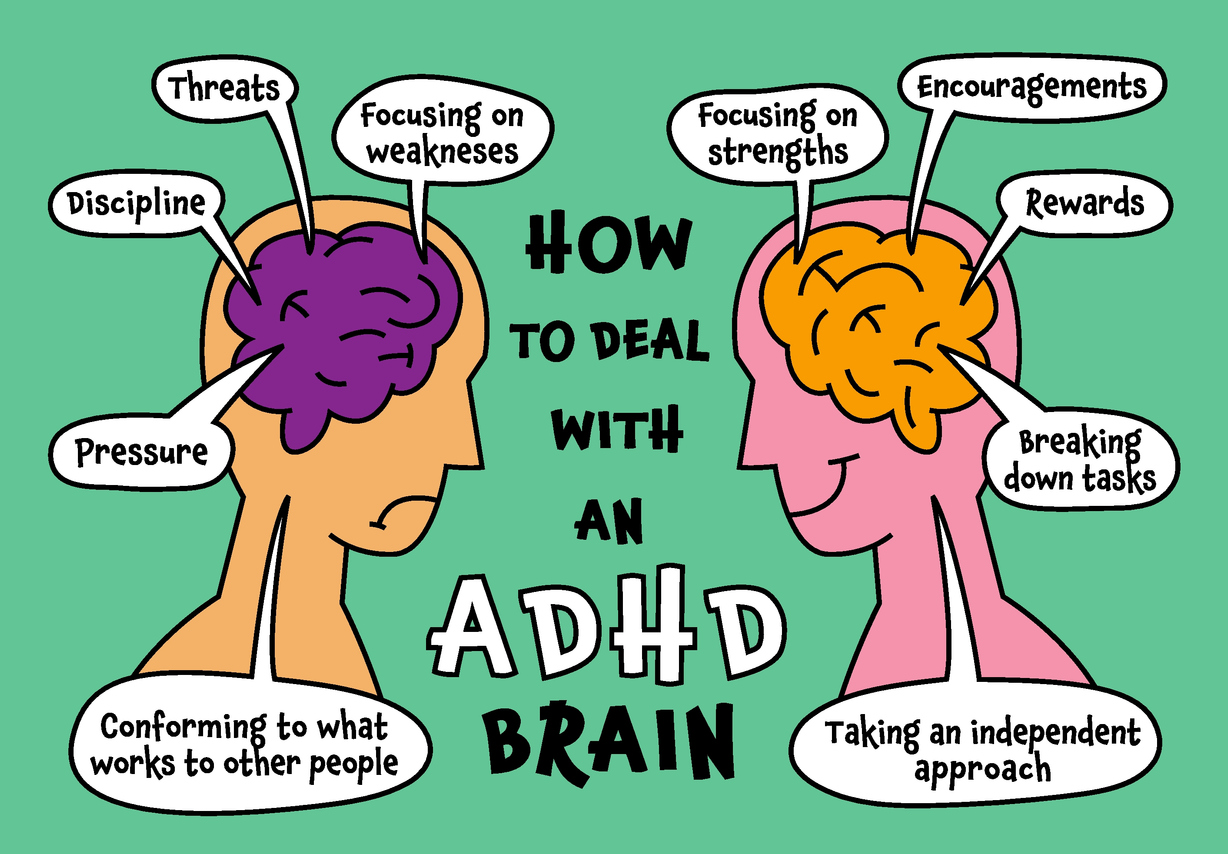
CBT for adult ADHD focuses on externalizing executive functions through time-blocking and breaking tasks down, while restructuring the self-critical schemas that fuel secondary depression. DBT skills training helps patients manage the impulsive emotional flooding and shame spirals that happen when an adult with ADHD feels criticized.
In a May 2026 randomized controlled trial by Zhang et al. (BMC Psychiatry, 2026), researchers compared 12 weeks of Group DBT vs Group CBT in 98 adults with ADHD. Both therapies significantly improved core ADHD symptoms, anxiety, and emotion regulation through a 6-month follow-up. However, CBT demonstrated a relative advantage on objective laboratory-based spatial working memory and executive function tasks, reinforcing CBT's role as the primary foundational therapy for comorbid anxiety and executive functioning.
Which Modality Fits Your Anxiety Profile?
Clinicians match patients to therapeutic modalities based on symptom presentation rather than diagnostic labels alone. Consider these common profiles to see what helps anxiety most effectively for your specific situation:
Profile A: Chronic Spiralling Worry and Avoidance
- Presentation: You spend hours anticipating worst-case scenarios about your health, career, or social life. You procrastinate, over-prepare, and avoid situations that trigger discomfort. Outside of these anxious triggers, your baseline emotional regulation is steady.
- Best Fit: Structured CBT. It directly dismantles threat overestimation via cognitive restructuring and eliminates avoidance behaviours through graded exposure.
Profile B: Rapid Emotional Escalation and Panic Crises
- Presentation: Your anxiety escalates from zero to one hundred in seconds. You feel physiologically hijacked, unable to think logically, and prone to emotional shutdowns or impulsive urges to escape the feeling.
- Best Fit: DBT Distress Tolerance and Emotion Regulation skills. DBT provides bottom-up physiological crisis tools (like TIPP) for moments when the brain is too flooded for top-down cognitive reframing.
Profile C: Overlapping Adult ADHD, Task Paralysis & Secondary Anxiety
- Presentation: Your anxiety is triggered by executive dysfunction. You miss deadlines, struggle to initiate tasks, and feel overwhelmed by daily disorganization, accompanied by bursts of frustration.
- Best Fit: Skills-based CBT integrated with medical management. This approach builds externalized routines, challenges perfectionistic paralysis, and addresses the underlying neurobiological symptom load.
Accessing Evidence-Based CBT and Integrated Anxiety Care in Canada
Finding evidence-based care in Canada often involves navigating long public waitlists or facing steep financial barriers. According to the BC Psychological Association (BCPA) recommended rate for 2025-2026, private psychologists in British Columbia charge $245 per hour. In Ontario, private CBT sessions typically cost $185 to $270 per session. Publicly funded programs offer free care but often lack integrated medication management and require months of waiting.
Fortunately, research confirms that virtual therapy removes geographic barriers without sacrificing clinical quality. A 2024 Canadian Medical Association Journal (CMAJ) meta-analysis of 54 randomized controlled trials (5,463 patients) confirmed that therapist-guided remote CBT is just as effective as in-person CBT for treating anxiety disorders, depression, and insomnia, regardless of follow-up length or clinical presentation.
- Jason Busse of McMaster University, the senior author of the CMAJ meta-analysis, noted: "The World Health Organization has designated CBT as essential health care, but access remains an important barrier for many Canadians. Our findings suggest that therapist-guided, remotely delivered CBT can be used to facilitate greater access to evidence-based care."
For Canadians seeking a collaborative virtual team combining CBT and medication, Cognito provides an integrated virtual subscription model in BC and Ontario. Patients complete an intake with a licensed Nurse Practitioner (NP) who can diagnose, prescribe, and titrate evidence-based medications, while simultaneously meeting virtually for two 1:1 skills-based CBT sessions per month with a CBT Care Provider.
Cognito offers accessible monthly subscription options to bridge the gap in Canadian healthcare:
- Core Medication Only Plan: $89/month for virtual Nurse Practitioner assessment, follow-up, and prescription management.
- Core CBT Therapy Only Plan: $139/month for two 1:1 virtual CBT sessions per month with a dedicated care provider.
- Combined Core Medication + CBT Therapy Plan: $169/month, integrating bi-weekly CBT sessions and ongoing Nurse Practitioner medication management under one unified care team.
Additionally, for adults requiring a holistic ADHD treatment program, Cognito offers comprehensive virtual ADHD diagnostic assessments for a one-time fee of $499, with assessment results typically taking 1 to 2 weeks.
Frequently Asked Questions
Affordable CBT therapy Canada
For affordable CBT therapy in Canada, Cognito offers a Core CBT Therapy plan in BC and Ontario for $139/month, which includes two 1:1 virtual sessions. While private fee-for-service rates in Canada run steeply - such as the BCPA recommended rate of $245 per hour or Ontario private rates of $185 to $270 per session - a predictable subscription model reduces the financial burden, bringing the cost down to roughly $69.50 per session. Many extended health benefits also reimburse these therapy fees.
Online CBT for anxiety Canada
Online CBT for anxiety in Canada effectively treats Generalized Anxiety Disorder, Social Anxiety Disorder, Panic Disorder, and health anxiety through virtual cognitive restructuring, thought records, and graded exposure. The CANMAT clinical guidelines establish CBT as the first-line treatment for anxiety. For comprehensive support, Cognito provides accessible virtual 1:1 CBT programs across BC and Ontario for $139/month.
CBT therapy with medication management Canada
Finding CBT therapy with medication management in Canada is challenging because public therapy programs rarely prescribe medication, and family doctors rarely deliver structured 1:1 therapy. Cognito solves this fragmentation with its Combined Core Medication + CBT Plan for $169/month in BC and Ontario. A licensed Nurse Practitioner handles assessment and prescribing, while a CBT Care Provider delivers bi-weekly therapy on the exact same clinical team, adhering to CAMH guidelines that encourage combined pharmacotherapy and CBT for long-term relapse prevention.
Is online cbt therapy as effective as seeing an in person psychologist
Yes, online CBT therapy is just as effective as seeing an in-person psychologist. A March 2024 systematic review and meta-analysis published in the CMAJ analyzed 54 randomized controlled trials involving 5,463 patients, finding no meaningful difference in clinical effectiveness between therapist-guided remote CBT and in-person CBT across anxiety disorders, depression, and insomnia. Therapist guidance through live 1:1 sessions is a key driver of this success compared to unguided self-help apps.
Online anxiety treatment BC
For online anxiety treatment in BC, patients can bypass long psychiatric waitlists and avoid the steep $245/hour private psychologist fees not covered by BC MSP. Cognito offers virtual coverage across the entire province with no family doctor referral required, providing Core Medication management for $89/month, Core CBT Therapy for $139/month, and Combined Medication + CBT for $169/month.
Telehealth options for treating overlapping adhd anxiety and depression
Telehealth options for treating overlapping ADHD, anxiety, and depression must provide integrated care rather than siloed treatments. Canadian clinical guidelines recommend combining pharmacotherapy with CBT to address comorbid internalizing symptoms. Cognito provides comprehensive virtual ADHD diagnostic assessments (results typically take 1 to 2 weeks) alongside integrated Nurse Practitioner medication management and CBT skills training for executive dysfunction and mood regulation.
Best online CBT therapy in Canada
The best online CBT therapy in Canada is defined by live 1:1 therapist guidance, integration with medical care for moderate-to-severe symptoms, the ability to treat co-occurring conditions, and transparent pricing. Cognito meets these four clinical benchmarks in BC and Ontario by delivering 1:1 therapist-guided sessions for $139/month and combined CBT with Nurse Practitioner medication care for $169/month, ensuring patients receive comprehensive, evidence-based treatment.