
Adult ADHD Coaching in Ontario: Is Coaching, Therapy, or Medication Management Right for You?

Discover the best adult ADHD support in Ontario.
As of May 2026, the landscape for adult ADHD support in Ontario has shifted toward a multimodal, integrated care model. With public wait times for specialist assessments reaching historic highs, adults are increasingly navigating a three-tiered system of care: coaching, therapy, and medication management.
For adults seeking relief, the sheer number of options—from finding an executive function coach to accessing adhd online medication management—can feel overwhelming. This decision-support guide explains the functional differences between these three interventions and provides a framework for Ontario residents to determine which path, or combination of paths, is right for them.
What is the Best Treatment for Adult ADHD?
In 2026, the gold standard for adult ADHD in Ontario is no longer a single prescription, but a multimodal "scaffolding" of medication, clinical therapy, and practical coaching.
Expert consensus emphasizes that "pills don't teach skills" Source. While medication is highly effective for approximately 80% of adults by reducing biological symptoms, it does not automatically create organizational systems or heal the emotional wounds of living with undiagnosed ADHD. The most effective treatment plans combine biological symptom reduction with behavioral strategies and emotional support.
The Three Pillars of Adult ADHD Support
Understanding the functional difference between coaching, therapy, and medication is the first step in building an effective treatment plan.
1. What is ADHD Coaching?
ADHD coaching is a future-oriented, directive intervention focused on improving executive function, goal attainment, and bridging the gap between knowing what to do and actually doing it. Coaches help clients build "scaffolding"—practical systems, workflows, and accountability structures for daily life.
- The Approach: Action-oriented and practical.
- The Ontario Context: ADHD coaching is not regulated by a provincial college in Ontario, though reputable practitioners are certified through bodies like the International Coaching Federation (ICF) or the ADD Coach Academy (ADDCA).
- The Cost: Coaching typically costs $130 to $200 per 50-minute session in Ontario Source. However, some coaches offer "training rates" as low as $75 for individuals on a budget Source.
2. What is ADHD-Informed Therapy (CBT)?
ADHD-informed therapy, particularly Cognitive Behavioural Therapy (CBT), focuses on emotional regulation, addressing "ADHD shame," and managing comorbid conditions like anxiety or depression. It targets the maladaptive thought patterns (e.g., "I'm just lazy") that result from years of undiagnosed struggle.
- The Approach: Exploratory and clinical. As experts note, "ADHD coaching works on the gap between what you know and what you do, while therapy works on the emotional patterns that widen that gap" Source.
- The Ontario Context: Provided by Registered Psychotherapists (RP) or Registered Social Workers (RSW). It is often covered by private insurance but is not covered by OHIP Source.
- Efficacy: A 2025 meta-analysis confirmed that CBT significantly improves core ADHD symptoms and psychological quality of life, especially when combined with medication Source.
3. What is Medication Management?
Medication management is a pharmacological approach focused on biological symptom reduction. It targets the "internal motor," distractibility, and impulsivity at a neurological level by increasing the availability of dopamine and norepinephrine in the brain.
- The Approach: Biological and neurological.
- The Ontario Context: Managed by Physicians or Nurse Practitioners (NPs). While public psychiatrist wait times are severely backlogged, NP-led virtual platforms now offer assessments and prescribing within days or weeks Source.
Comparison Guide: Which Intervention Do You Need?
To help clarify which service aligns with your current needs, use this comparison matrix:
Navigating ADHD Care Costs and Wait Times in Ontario (2026)
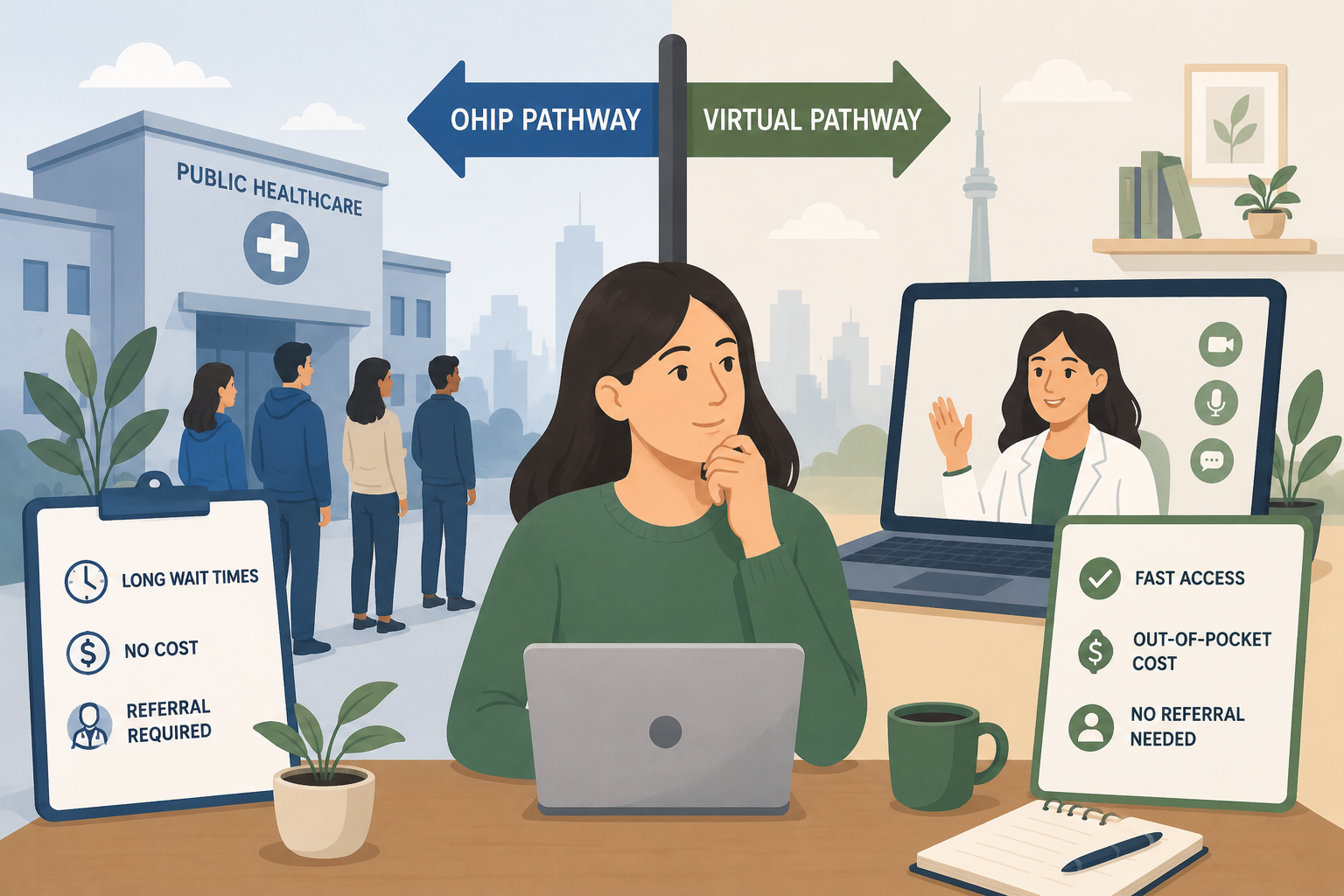
Navigating care in Ontario requires balancing speed, cost, and coverage. The 14-month OHIP waitlist for ADHD assessment has created a "lost year" for many Ontario professionals, making alternative routes essential.
- The Public Route (OHIP): Fully covered but severely backlogged. As of early 2026, major centers like CAMH report wait times of 14 to 18 months for adult ADHD intake Source.
- The Private Route (Psychologists): Rapid (3–6 weeks) but expensive. Comprehensive assessments in the Greater Toronto Area range from $2,000 to $4,500 Source.
- The Virtual/NP Route: Tele-mental health platforms utilize Nurse Practitioners to bridge the gap. For example, Cognito offers comprehensive diagnostic services and medication management at a fraction of the cost of private psychologists, with wait times of only a few days Source. Virtual NP-led care is now the primary bridge to functional recovery in the province.
The Case for Integrated Care
Combining treatments yields the highest success rates for adults with ADHD. While medication quietens the ADHD brain, therapy and coaching build the systems that allow that brain to thrive in a neurotypical world.
- Medication + CBT: Research published in Psychiatric Times (Sept 2025) shows that combining CBT with pharmacotherapy enhances treatment outcomes significantly more than medication alone within just 3 months Source.
- Medication + Coaching: Medication "turns down the static," making it possible for an individual to actually engage with the strategies a coach provides. A 2026 study found that coaching leads to "medium to large effect sizes" in improving executive functioning when integrated into a multimodal plan Source.
How to Choose Your Starting Point
If you are newly seeking support, establishing a clinical baseline is usually the most effective first step.
Platforms like Cognito occupy a critical "first-step" position in the Ontario ADHD care journey. By providing NP-led adhd online medication management alongside evidence-based CBT in a single subscription, Cognito addresses the two foundational clinical pillars of ADHD treatment. This integrated approach bypasses the 18-month psychiatrist queue while remaining highly affordable.
Once clinical symptoms are stabilized through medication and foundational CBT, ADHD coaching serves as the natural next step. A coach can provide the high-touch accountability needed to leverage your newly quieted mind toward specific career, academic, or lifestyle goals.



.jpg)


